Dimbham Ghats: The “One Gear Rule” You Must Follow Before Passing Heavy Truck Breakdown Zones
Heading up the notorious 27 hairpin bends of Dimbham Ghats? If you don’t shift down to a single low gear before hitting the steepest truck breakdown zones, you risk catastrophic brake failure or a dangerous stall on these narrow, high-angle forest curves.
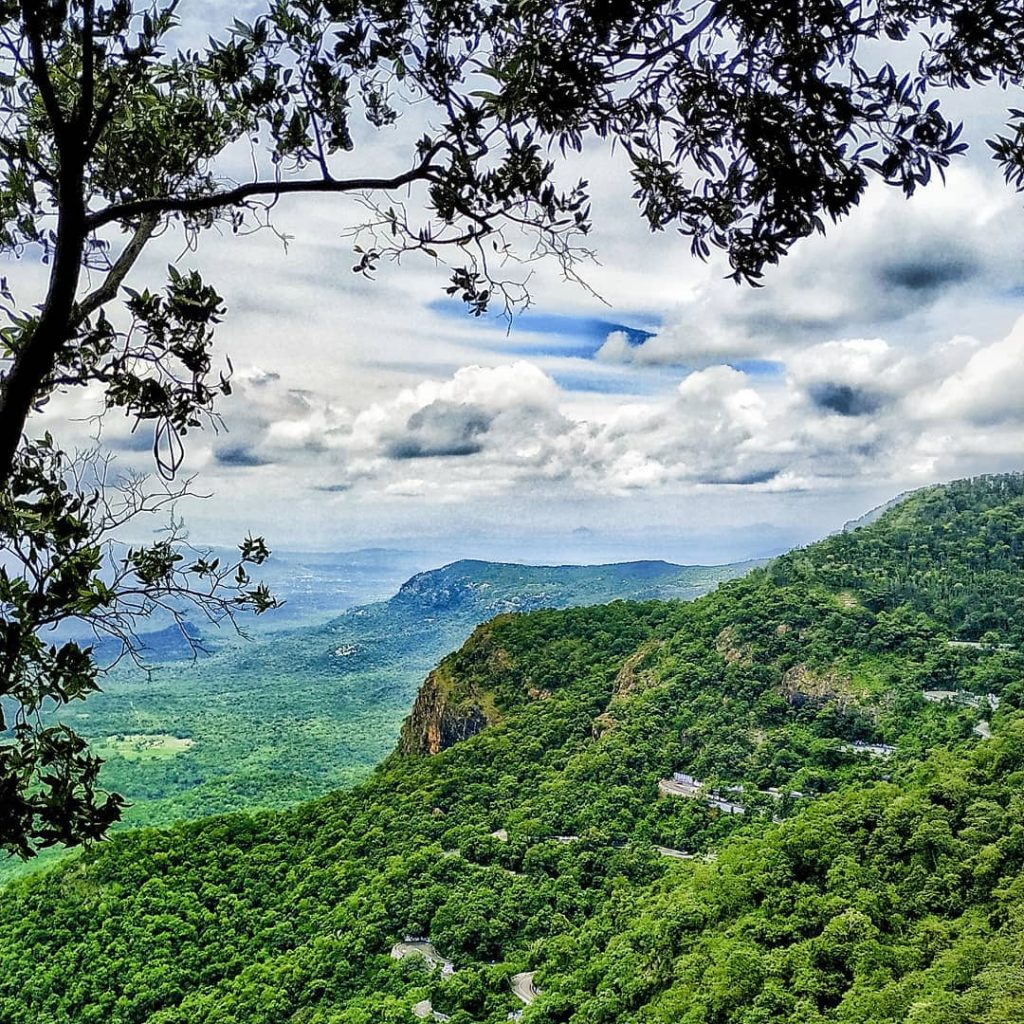
You’ve packed your bags, mapped your route from Coimbatore or Bangalore, and you’re ready to tackle the scenic pass connecting Tamil Nadu and Karnataka. You expect beautiful views of the Sathyamangalam Tiger Reserve.
But then you hit the foothills.
If you are a driver unfamiliar with high-gradient mountain passes, the sheer volume of multi-axle freight trucks crawling up these 27 hairpin bends can be intimidating. This isn’t your average scenic drive; it is a vital, steep commercial corridor where one wrong braking habit can leave you stranded—or worse, run over by a rolling truck.
Here is the honest, local-approved guide to mastering the “One Gear Rule” on the Dimbham Ghats and navigating the high-risk breakdown zones safely.
| Factor | Critical Traveler Details |
|---|---|
| Best Ascent Hours | 5:00 AM – 10:00 AM (To avoid peak freight traffic) |
| Night Restriction | Heavy vehicles banned from 6:00 PM to 6:00 AM |
| High-Risk Zones | Hairpin Bends #3 to #9 and #14 to #18 (Steepest inclines) |
| The Golden Rule | Descend in the exact same gear you used to climb (usually 1st or 2nd) |
| Road Conditions | Narrow 2-lane asphalt, steep drop-offs, sharp blind turns |
What is the “One Gear Rule” and Why is it Non-Negotiable?
The “One Gear Rule” is a golden principle taught by heavy vehicle operators and mountain driving specialists. It states: Use the exact same low gear to descend a steep hill that you would use to climb it.
On Dimbham Ghats, this means keeping your car or motorcycle in 1st or 2nd gear throughout the steepest stretches (specifically bends #3 to #18).
Why? It all comes down to engine braking. When you descend in a low gear, you let the engine’s compression control your speed naturally. If you slide into neutral or ride in high gear while constantly stepping on your brakes, the friction generates intense heat. This leads to “brake fade”—a terrifying scenario where your brake pads overheat, lose friction, and fail completely when you need them most.
Why Trucks Constantly Break Down on Dimbham
Dimbham Ghats is notorious for gridlocks that can last anywhere from three to twelve hours. These jams are almost always caused by overloaded commercial trucks carrying sugarcane, timber, or industrial goods from Karnataka to Tamil Nadu.
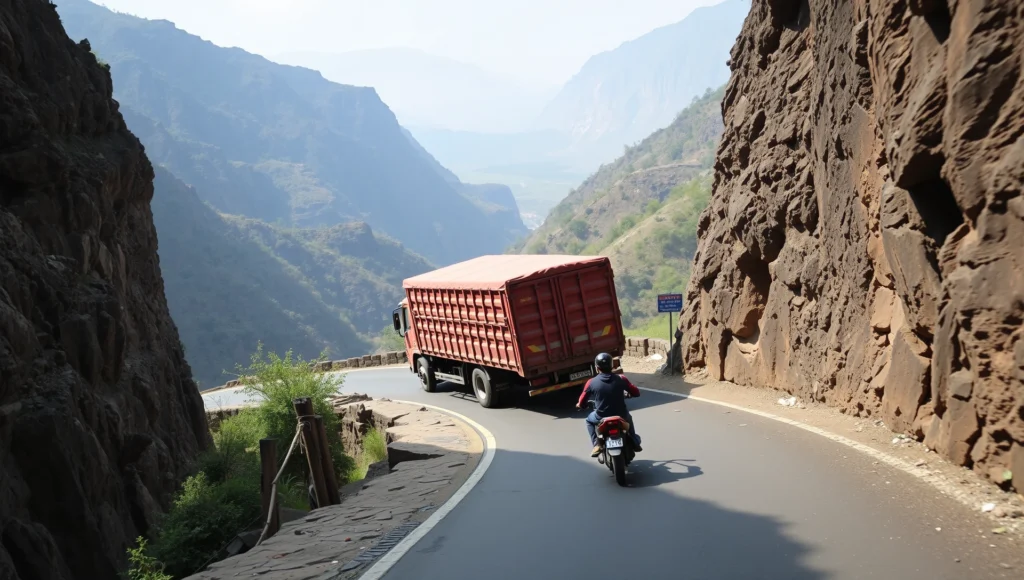
As these massive vehicles try to swing wide around the tight, high-gradient hairpin turns, their engines are pushed to the absolute limit. A single missed gear shift by a truck driver on a 15-degree incline can stall the engine. Once a multi-axle truck stalls on a hairpin bend, its air brakes can lock up, or worse, its axle can snap under the immense pressure. This instantly seals off the narrow two-lane road for all other traffic.
Survival Strategies for the High-Risk Breakdown Zones
To navigate these zones like an expert, keep these tactical rules in mind:
- Give Descending Trucks the Inside Lane: If you are climbing and see a massive truck descending towards a hairpin bend, stop before the turn. Let them use the entire width of the road to make their swing. Trying to squeeze past them is a recipe for getting pinned against the concrete barrier.
- Never Tailgate in the Danger Zone: Keep at least a three-car-length gap when following trucks between bends #3 and #9. If a loaded truck stalls ahead of you, it may roll backward a few feet before its emergency brakes engage.
- Watch for Oil Spills: Straining truck engines often blow gaskets or leak transmission fluid. Keep an eye out for dark, shiny patches on the asphalt, especially around the apex of the hairpin bends.
The Forest Factor: Respect the Sathyamangalam Reserve
Remember, Dimbham Ghats cuts directly through the protected Sathyamangalam Tiger Reserve. Beyond the mechanical dangers of the road, you are sharing the space with wild elephants, leopards, and gaurs.
Never honk excessively, do not throw food trash out of your window, and absolutely do not step out of your vehicle, even if you are caught in a massive traffic jam caused by a broken-down truck. Stay inside, keep your engine in low gear, and patiently wait for the highway patrol to clear the bottleneck.
Frequently Asked Questions (FAQ)
Q: Is night driving allowed on the Dimbham Ghat road?
A: High court regulations restrict heavy commercial vehicles (above 10.2 tonnes) from using the ghats between 6:00 PM and 6:00 AM to protect wildlife. While light personal cars and two-wheelers are technically allowed, night travel is highly discouraged due to zero streetlighting, active wildlife crossings, and sudden heavy fog.
Q: What should I do if my brakes start smelling hot or smoking?
A: Pull over safely at the nearest straight stretch of road with a shoulder (avoid parking on hairpin bends). Do not pour water on hot brake rotors, as this can warp and ruin the metal. Instead, let them cool down naturally for 20 to 30 minutes, and adjust your driving style to use low-gear engine braking for the rest of your descent.
Q: Which are the most dangerous hairpin bends on this route?
A: Hairpin bends #3 through #9 are incredibly steep and sharp, making them the prime zones for heavy truck engine failures and axle breaks. Take extra precautions and maintain a wide distance from larger vehicles in this specific section.