The Hidden Balcony Hazard in Valparai Jungle Homestays
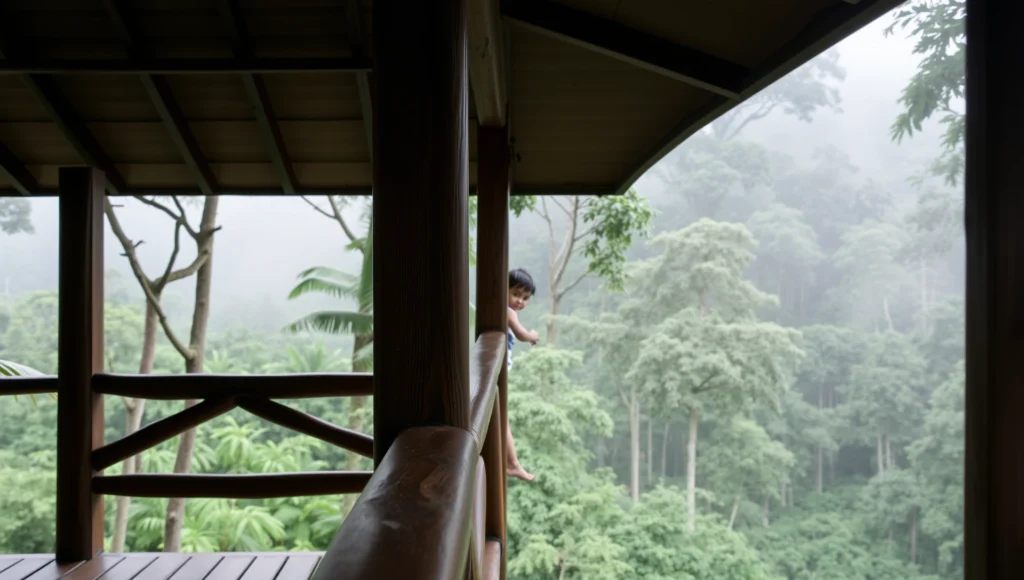
Booking a cozy Valparai tea-estate bungalow? Before letting your kids run onto that scenic balcony to spot wildlife, look closely at the railing gaps—and what is lurking in the bushes directly below.
You book a heritage colonial bungalow in Valparai, imagining yourself sipping fresh Nilgiri tea while your children point at the misty canopy. You arrive, open the French doors to the balcony, and feel an instant rush of mountain air.
But if you are traveling with toddlers or young kids, this is the exact moment you need to pause and inspect the floorboards and railings.
Unlike standard city hotels bound by rigid modern municipal codes, Valparai’s remote jungle homestays, retrofitted planters’ bungalows, and budget treehouses often feature balcony designs that present a serious, overlooked safety hazard for families.
Here is the honest, checklist-driven truth about Valparai’s balcony risks, and how to protect your family without ruining your holiday.
| Safety Factor | Critical Jungle Homestay Details |
|---|---|
| Railing Gap Standard | Often exceeds 6 inches in heritage properties (safe limit is under 4 inches). |
| The “Under-Balcony” Threat | Leopards, Indian Gaur, and wild elephants active in the tea bushes below. |
| Primate Activity | Lion-tailed macaques and Nilgiri langurs frequently jump onto railings. |
| Ground-Level Drops | Many stilt-cabins feature sudden 15-to-30-foot drops over sheer rock faces. |
| Slippage Risk | High humidity and frequent mist make wooden decks incredibly slick. |
1. The Heritage Railing Gap (The 4-Inch Rule)
Many of Valparai’s finest stays are renovated British-era colonial bungalows. While beautiful, their wooden balustrades and wrought-iron railings were built long before modern child-safety standards.
It is incredibly common to find vertical or horizontal railing gaps wider than 6 inches. A curious toddler can easily slip their head, torso, or entire body through these spaces. To make matters worse, horizontal railings function as makeshift ladders, inviting older children to climb up for a “better view.”
2. What Lies Below: The Tea Estate Wildlife Factor
In a typical hill station, a fall from a balcony is purely a structural hazard. In Valparai, it is doubly dangerous because of the local ecosystem.
Many homestays in areas like Iyerpadi, Chinnakallar, or Sholayar border active wildlife corridors. Indian Gaur (bison) and leopards regularly shelter in the tea bushes right beneath these elevated balconies. A child dropping a toy over the edge may instinctively try to climb down or reach out, bringing them into dangerously close proximity with wild animals.
3. The Bold Primates of the Western Ghats
Valparai is home to endangered Lion-tailed Macaques and Nilgiri Langurs. Unlike city monkeys, these primates are strong, agile, and highly curious.
They routinely land on balcony railings searching for food. If a child is on the balcony holding snacks, a sudden interaction can startle both the child and the animal. A panicked child backing away quickly on a wet, high-altitude balcony is a recipe for a catastrophic fall.
4. How to Vet Your Valparai Stay Before Booking
You do not have to cancel your trip to Valparai; you just need to ask the right questions before paying your deposit:
- Ask for Real Photos: Do not rely on wide-angle promotional shots. Ask the host via WhatsApp for a direct photo of the balcony railings looking straight down.
- Request Ground-Floor Rooms: If you are traveling with kids under five, opt for ground-floor garden cottages rather than elevated stilt cabins or first-floor suites.
- Check for Mesh/Netting: Some family-friendly homestays install temporary safety nets or fine wire mesh over wide-gap railings. Ask if this is an option.
Frequently Asked Questions (FAQ)
Q: Are there kid-safe homestays in Valparai?
A: Yes, but you must specifically look for modern family-oriented resorts or request ground-floor rooms in colonial bungalows to avoid high-altitude balcony risks entirely.
Q: Can we keep balcony doors open at night for the mountain breeze?
A: Absolutely not. Keeping balcony doors open invites nocturnal wildlife, including civets, bats, and inquisitive monkeys, directly into your living space.
Q: What should I do if a monkey enters our homestay balcony?
A: Retreat indoors immediately, close and lock the glass doors, and do not make direct eye contact or show food to the animal.