Dhanushkodi After Dark: The Real Reason You Get Chased Out Before Sunset
Thinking of catching the midnight stars at India’s last land strip? By 5:30 PM, the Coast Guard and local police will actively clear you out of Dhanushkodi, enforcing a strict sunset curfew rooted in high-stakes border security and treacherous maritime conditions.
You have just driven down the magnificent, arrow-straight stretch of National Highway 87. To your left is the calm, turquoise Bay of Bengal; to your right is the roaring, wild Indian Ocean. You reach Arichal Munai—the absolute tip of the peninsula—and the view is hypnotic.
Naturally, you think: “What if I stay back a couple of hours? The night sky must be incredible here.”
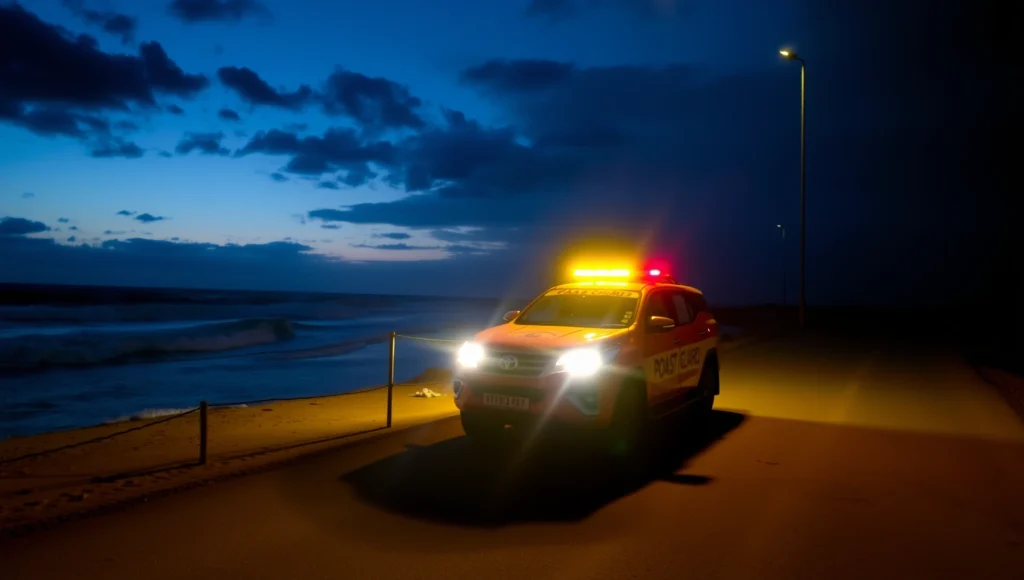
But before you can even switch off your ignition to watch the twilight fade, a police siren blares behind you. A patrol vehicle flashes its lights, and officers motion for you to turn back immediately.
This isn’t a friendly suggestion. It is a highly coordinated, daily security sweep. Here is the honest, boots-on-the-ground reality of why civilians are strictly banned from Dhanushkodi after dark.
| Factor | Critical Traveler Details |
|---|---|
| Strict Curfew Time | 6:00 PM (Checkpost begins closing by 5:00 PM – 5:30 PM) |
| Active Patrols | Indian Coast Guard, Tamil Nadu Marine Police & Local Beat Officers |
| Primary Hazard | International maritime border proximity & unpredictable high tides |
| Road Access | NH 87 (Mukuntharayar Chathiram checkpost is barricaded post-sunset) |
| Infrastructure | Zero electricity, no mobile network coverage, no emergency services |
1. The Geopolitical Hotspot: The 24-Kilometer Gap
The primary reason for the aggressive policing is simple geography. Dhanushkodi is not just a scenic tourist spot; it is a sensitive international border zone. Sri Lanka’s Talaimannar is a mere 24 kilometers (approx. 15 miles) across the Palk Strait.
Under the cover of darkness, this narrow stretch of sea becomes a prime corridor for illegal activities. Over the decades, the area has faced challenges with smuggling networks (handling everything from gold and narcotics to endangered sea cucumbers) and unauthorized crossings.
To monitor this, the Indian Coast Guard and Navy deploy high-tech thermal imaging cameras, coastal radars, and physical patrols. After sunset, any heat signature or moving vehicle on the deserted sands of Dhanushkodi triggers an immediate security alert. By clearing out all tourists, security forces can instantly identify actual threats without civilian distractions.
2. The Ghost of 1964: Lethal Marine Hydraulics
Dhanushkodi is famously called a “ghost town” for a tragic reason. In December 1964, a massive cyclonic storm surge completely wiped out the flourishing town, washing away a passenger train, a railway station, and killing over 1,800 people. The land has never been declared safe for permanent civilian resettlement.
Even today, the ocean here is incredibly volatile:
- The Confluence Clash: At Arichal Munai, the roaring, high-energy waves of the Gulf of Mannar crash directly into the calm waters of the Palk Bay. This creates deceptive, violent undercurrents.
- Quicksand & Shifting Dunes: The sandy shorelines change rapidly. What looks like dry, hard-packed sand can turn into deep wet quicksand within minutes during a high tide.
- Sudden High Tides: After 6:00 PM, the tide rises rapidly, frequently swallowing parts of the low-lying sandy spit. Without natural light, a stranded traveler could easily find themselves cut off from the mainland.
3. Zero Infrastructure and “Digital Blackouts”
If you get into trouble in Dhanushkodi after dark, you are entirely on your own. There is absolutely no electricity or street lighting along the last 9.5-kilometer stretch of NH 87.
Furthermore, your smartphone will likely fail you. Mobile signals from Indian telecom operators drop to zero near the tip, and your phone will often pick up Sri Lankan telecom networks instead. If your vehicle breaks down, gets stuck in the sand, or is hit by a rogue wave, calling for emergency assistance is practically impossible.
How to Plan Your Visit Safely
To experience the haunting beauty of Dhanushkodi without getting into trouble with the law, keep these practical tips in mind:
- The Sweet Spot (6:00 AM – 8:00 AM): Arrive at the Mukuntharayar Chathiram checkpost right when it opens at 6:00 AM. The morning light is stunning, the air is cool, and you will beat the heavy tourist buses that clog the road by midday.
- Respect the 5:00 PM Cutoff: Start making your way back from the Arichal Munai viewpoint by 5:00 PM. This gives you plenty of time to enjoy a relaxed drive back before the police sweep begins.
- Keep Your IDs Handy: Random security checks are common at the checkposts. Always carry a physical or digital copy of a government-issued ID card.
Frequently Asked Questions (FAQ)
Q: Is there any exception for staying in Dhanushkodi overnight?
A: Absolutely not. No tourists, photographers, or campers are permitted past the Mukuntharayar Chathiram checkpost after hours. Only local fishermen who live in temporary, make-shift huts are allowed in designated areas, and even they are closely monitored by the marine police.
Q: Can I walk down the beach to the ruins of the old town at night?
A: No. Walking on the beaches or exploring the ruins of the church and railway station after sunset is strictly prohibited. Patrols sweep the ruins thoroughly to ensure no trespassers remain hiding in the structures.
Q: Can we take our own private cars and bikes up to Arichal Munai during the day?
A: Yes, the newly laid 2-lane asphalt road (NH 87) allows private cars and two-wheelers to drive all the way to the tip during authorized daytime hours (usually 6:00 AM to 5:00 PM).