Dhanushkodi End of the Road Drive: The Tidal Water Mistake That Rusted My Bike Frame in 2 Hours
Riding to Dhanushkodi’s legendary “End of the Road” feels like riding into heaven, but parking too close to the shifting tidal waves can coat your motorcycle in aggressive marine salt that eats through paint and rusts steel frames in less than 120 minutes.
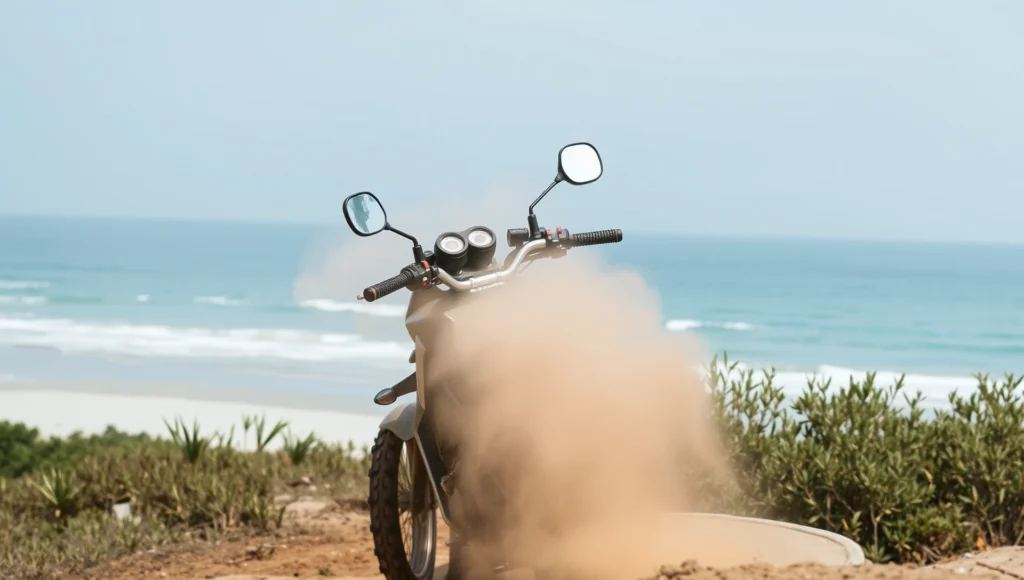
You’ve seen the Instagram reels: a motorcycle parked on a pristine, narrow strip of tarmac with the roaring Bay of Bengal on one side and the calm Indian Ocean on the other. It looks like the ultimate riding bucket list destination. But what those beautiful 15-second clips don’t show you is the frantic scrubbing, ruined chain kits, and bubbling frame paint that happens just hours after leaving Arichal Munai.
If you are planning to ride your beloved motorcycle down National Highway 87 to the ghost town of Dhanushkodi, you need to understand that this environment is aggressively hostile to metal. Here is the honest truth about how a single rookie mistake can cause structural damage to your motorcycle in the blink of an eye.
| Factor | Critical Rider Details |
|---|---|
| Best Riding Hours | 6:00 AM – 10:00 AM (Calmer winds, lower tide levels) |
| Corrosion Danger Zone | Wet sand shores and tidal splash zones past the checkpost |
| Crucial Pre-Ride Step | Apply heavy anti-rust spray (WD-40 or ACF-50) to exposed welds |
| Emergency Wash Point | Local water-wash garages in Rameswaram bypass (18 km away) |
| Road Conditions | Flawless, windswept 2-lane NH 87 tarmac with sudden sand drifts |
The Temptation: Why Riders Get Too Close
The newly laid road ends at Arichal Munai, a circular viewpoint where the two oceans meet. The temptation to ride off the asphalt and onto the wet, hard-packed sand is immense. Many riders drop their tire pressure and slide onto the beach to capture that perfect “bike next to the waves” shot.
This is where the nightmare begins. The sand at Dhanushkodi isn’t ordinary beach sand; it is heavily saturated with highly concentrated sea minerals and alkaline compounds. Even if you don’t ride directly into the waves, the intense sea breeze carries a thick, invisible mist of saline moisture that settles on your warm engine casing and frame instantly.
Why Dhanushkodi’s Salt Air is a Silent Bike Killer
The combination of tropical heat, high humidity, and direct contact with saltwater creates a hyper-corrosive microclimate. When you park near the shoreline, the following three things happen simultaneously:
- Galvanic Acceleration: The warm engine heat cooks the salty mist onto the metal surfaces, accelerating the chemical reaction. Unfinished steel welds, exhaust pipe brackets, and chain links start oxidizing almost instantly.
- Sinking Sand Traps: The shore sand contains hidden pockets of soft mud saturated with saltwater. If your bike sinks even an inch, your swingarm, brake calipers, and wheel bearings get coated in a corrosive paste.
- Hidden Salt Deposition: The high-speed sea winds force salt particles deep into your bike’s wiring harness, spark plug caps, and behind the instrument console, where it stays hidden from plain sight.
Within two hours of leaving the beach, you will notice a fine white crust forming on your engine fins. By the time you ride back to your hotel in Rameswaram, raw steel bolts and chain links will already begin showing bright orange surface rust.
The 3-Step Survival Guide for Your Motorcycle
You don’t have to skip this magical ride to save your bike. You just need to be incredibly disciplined before, during, and after the journey.
1. Coat the Vulnerable Spots Before You Leave
Before you cross the Pamban Bridge toward Rameswaram, spray a generous coat of anti-rust spray, silicone spray, or even clean chain lube onto your bike’s exposed frame welds, chain, engine bolts, and disc brake rotors (be careful not to get overspray on the brake pads). This acts as a temporary sacrificial barrier against the salty air.
2. Keep It on the Asphalt
Respect the signs and the geography. Never, under any circumstance, ride your bike onto the wet sand flats. Take your photos from the designated paved parking zones. The view is just as spectacular, and your suspension components will thank you.
3. The Golden “Two-Hour Wash” Rule
Treat this as non-negotiable: once you finish your ride to the End of the Road, ride straight to a local washing station on the Rameswaram bypass. Do not wait until the next morning. Ask the operator to perform a thorough, high-pressure wash using cold, fresh water to blast away the salt deposits from the undercarriage before using any shampoo.
Frequently Asked Questions (FAQ)
Q: Can I wash my bike with local tap water in Rameswaram?
A: Be careful. Much of the local groundwater in the coastal town of Rameswaram has a high salinity level. Ask the washing station if they use sweet/potable water or RO water for their final rinse.
Q: Will a ceramic coating or PPF protect my bike from Dhanushkodi’s salt mist?
A: Yes, ceramic coatings protect painted body panels. However, they do not cover crucial moving parts like the drive chain, brake calipers, exhaust headers, and lower frame joints—which are the first areas to rust.
Q: Is the road to Dhanushkodi closed at night?
A: Yes, the checkpoint near Mukundharayar Chathiram closes to private vehicles by 5:00 PM to 6:00 PM depending on weather conditions. Riding in the dark is highly dangerous due to shifting sand drifts and lack of streetlights.